


– Professor Dr. Shatrughan Shrestha
Ruit was born on September 4, 1954, to rural illiterate parents, father’s Sonam Ruit and mother Kesang Ruit, in the remote mountainous village Olang Chung Gola near the border with Tibet in Northeast Nepal. His village of 200 people was located 11000 feet above Sea level on the lap of the world’s third highest peak, Mt. Kanchenjunga. It is one of the most remote regions of Nepal with no electricity, School, health facilities or modern means of communication and lies blanketed under snow for six to nine months a year.
Ruit’s family made a subsistence living from small agriculture, petty trading and livestock farming.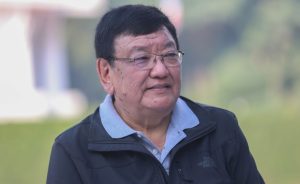
Ruit was the second of his parent’s six children. He lost three siblings an elder brother to diarrhea at age three and younger sister Chundak to fever at age eight in many interviews, Ruit has mentioned that for him, the most painful was his younger sister Yangla’s death. Yangla was his childhood companion and he was to develop a special bond with her over the years. She died at 15 of Tuberculosis as the family was too poor to afford treatment that could have saved her life.
In many interviews, Ruit has said that this loss made a strong mark on him and instilled in him a resolve to become a doctor and work for the poor who would not otherwise have access to health care.
The nearest school from his village was fifteen days walk away in Darjeeling. His father, a small-time businessman, sent Ruit to St. Robert’s School in Darjeeling at the age of seven and provided financial support for his early medical career. Ruit’s life in Darjeeling was hard as he was away from his parents and home for about four to five years. After a few years, he returned to Nepal and continued his study. In 1969, Ruit graduated from Siddhartha Vanasthali School in Kathmandu, Nepal and later was further educated in India. He studied Bachelor of Medicine Bachelor of Surgery (MBBS) from King George’s Medical College, Lunknow with a scholarship from 1872 to 1976. Ruit then returned to Nepal and worked as a General Physician in Bir Hospital, Kathmandu for three years. Later he wanted to specialize in Ophthalmology, so he continued his studies from 1981 at the all-India Institute of medical Sciences, Delhi with a scholarship and achieved his Master’s Degree. After three years in 1984 he returned to Nepal and worked in an Eye Hospital in Tripureshwor for eight years.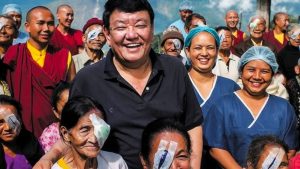
Meanwhile, Australian Ophthalmologist Fred Hollows was in Nepal as a mentor, selected by (WHO). He noticed Ruit’s work and determination and offered him further study about cataract surgery in Australia in 1986. Ruit further studied in Australia the Netherlands and The United States (USA).